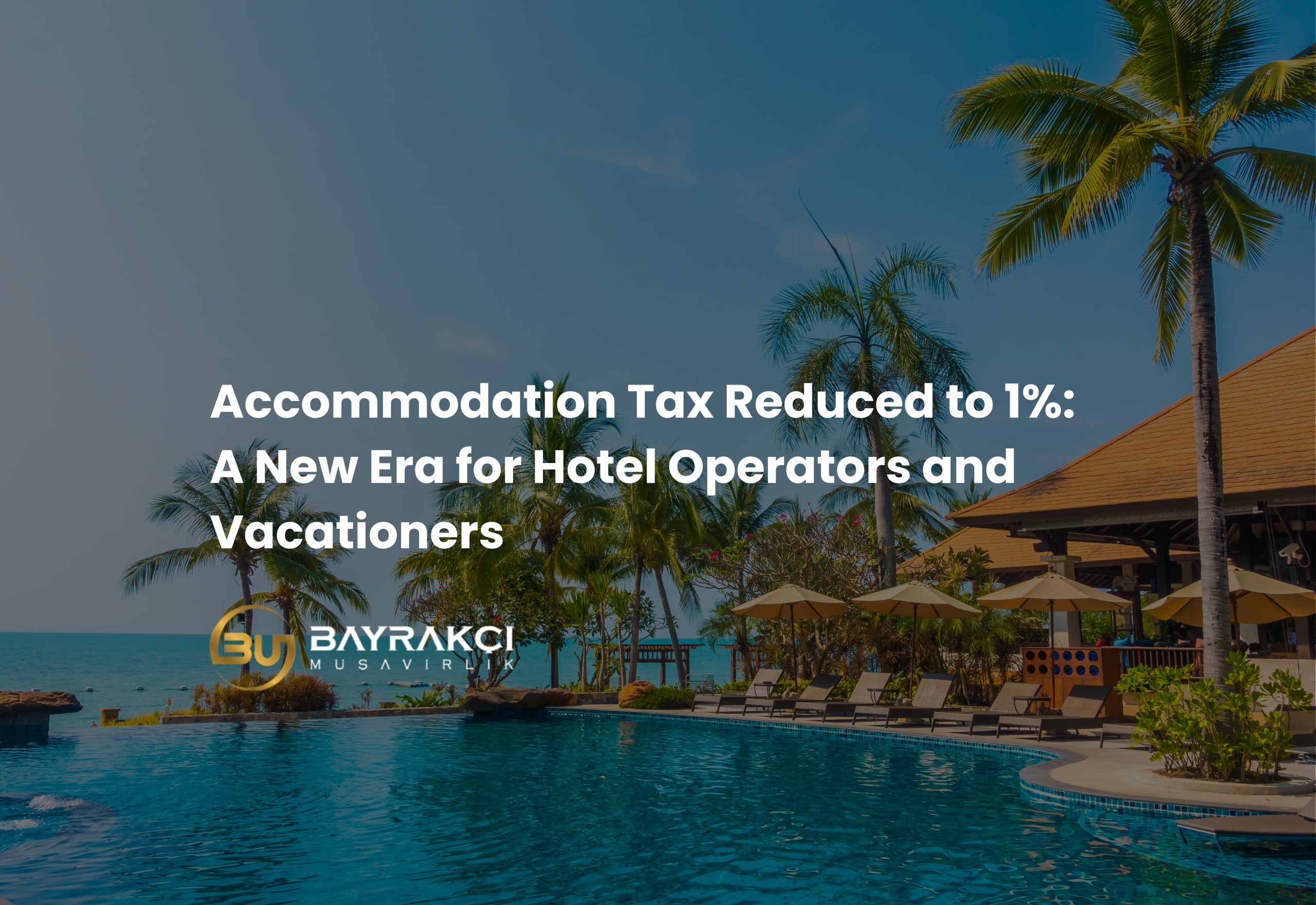
An important development closely affecting the tourism sector has taken place. A Presidential Decree published in the Official Gazette on April 30, 2026, reduced the accommodation tax rate. The rate, which was previously set at 2%, has been reduced to 1% and will remain in effect until December 31, 2026. This regulation is seen as the beginning of a new era for both lodging establishments and citizens planning vacations.
Scope and Duration of the Regulation
The President has the authority to determine the lodging tax rate under Article 34 of the Expenditure Taxes Law No. 6802. Pursuant to this authority, the tax rate began to be applied at 1% as of May 1, 2026. The reduced rate is valid until December 31, 2026; unless a new regulation is enacted, the rate will revert to 2% as of January 1, 2027.
Which Services Are Covered?
The lodging tax is not levied solely on overnight stays. All services provided in conjunction with overnight stays at facilities such as hotels, motels, resorts, guesthouses, apartment hotels, hostels, campgrounds, mountain cabins, and highland cottages—including meals, beverages, activities, entertainment, pool access, sports, and use of thermal facilities—are subject to the tax. In other words, the entire range of services offered within the facility benefits from this reduced tax rate.
What Does This Mean for Hotel Operators?
Industry representatives view this reduction as a move that will give businesses some breathing room, particularly in the face of rising costs and competitive pressures. The halving of the tax rate allows businesses to set their pricing policies more flexibly. Coming just before the summer season, this decision is critically timed to support early booking demand and provide a competitive advantage in pricing.
The reduction in the tax rate may not only affect the prices businesses pass on to customers but could also lead to improved profit margins. Since the measure is temporary, businesses are advised to adjust their planning for the period after the end of the year accordingly.
Impact on Vacationers
From the perspective of those planning vacations, this reduction in the lodging tax translates directly into cost savings. The tax, previously calculated at 2%, has now been cut in half. This development is particularly positive for families planning their vacations on a budget and for vacationers planning extended stays.
Outlook for the Coming Period
The fact that the discount will expire at the end of 2026 raises the question of what course the sector will take in the coming period. Since the President has the authority to reassess this rate, it is possible that a new decision will be made as the year draws to a close, in line with the sector’s expectations and economic conditions.
This adjustment to the lodging tax rate aims to enhance the tourism sector’s competitiveness and reduce lodging costs. It is crucial to closely monitor this development—which offers significant opportunities for hotel operators and vacationers—and to properly fulfill tax obligations.
For detailed information on this matter and tailored solutions for your business, please contact the expert team at Bu Müşavirlik. We are here to help you make the most of tax advantages and manage these processes effectively.